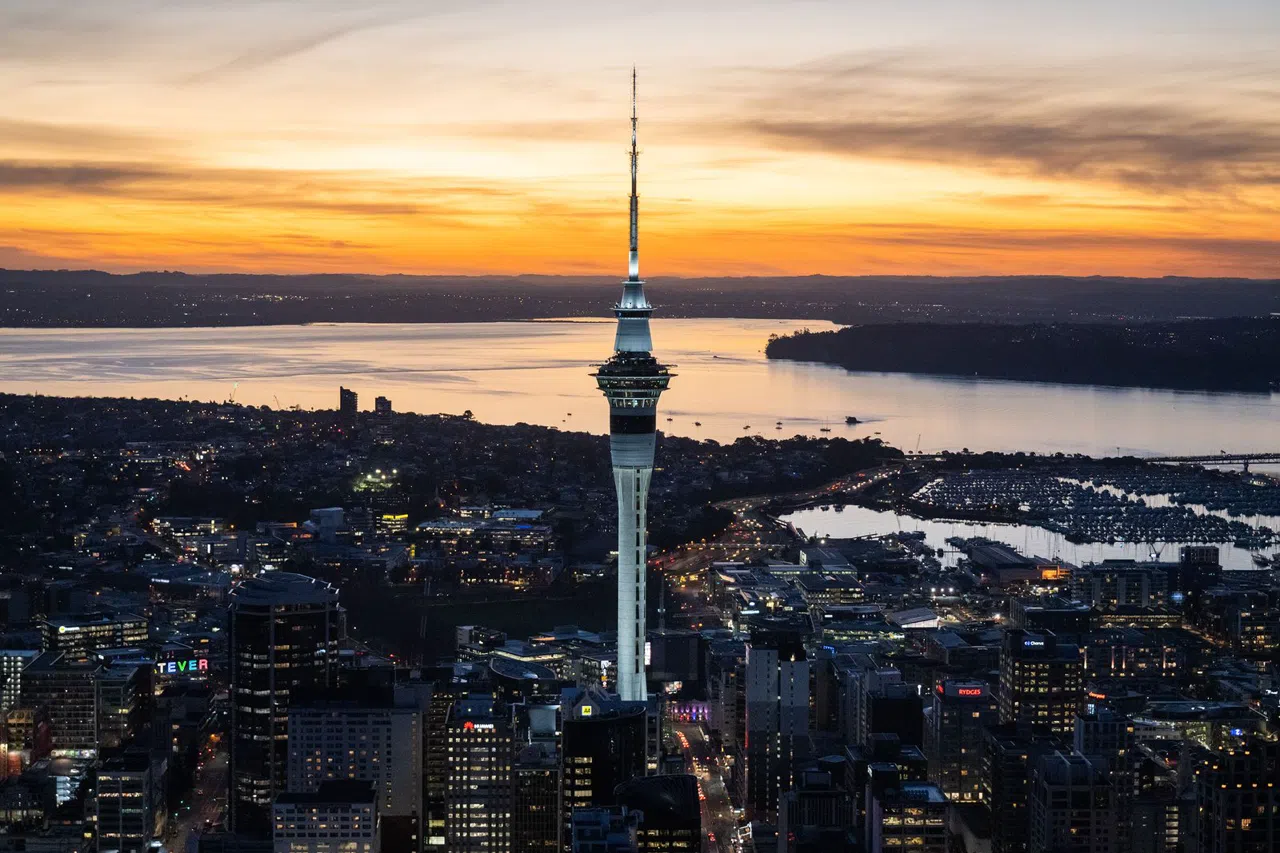

The Sky Tower is the first thing most visitors see of Auckland and usually the last thing they stop looking at. It rises 328 metres out of a low, harbour-facing city that otherwise keeps its buildings modest, so from almost any street in the central city you can use it to work out where you are. What people tend not to know on arrival is that the tower is sold as three separate things rather than one. You can look, you can go over the edge, and you can sit down to eat while the city turns slowly past the glass. The sensible way to plan an Auckland trip is to treat those as a sequence rather than a menu.
The ticket that gets you to 220 metres
The Sky Tower Observation Decks (Victoria Street West, central city) are the ground floor of the whole exercise. One adult general admission, around NZ$47, covers all three of them: the Main Observation Level at 186 metres, The Lookout at 192 metres and the Sky Deck at 220 metres. Children and families pay less. The ticket stays valid for six months, which matters more than it sounds. If you go up into low cloud on your first afternoon, you can come back on a clear morning without paying again. On a properly clear day the Sky Deck sees about 82 kilometres out, far enough to separate the Hauraki Gulf islands from each other and to read the ranges west of the city as a single green wall.
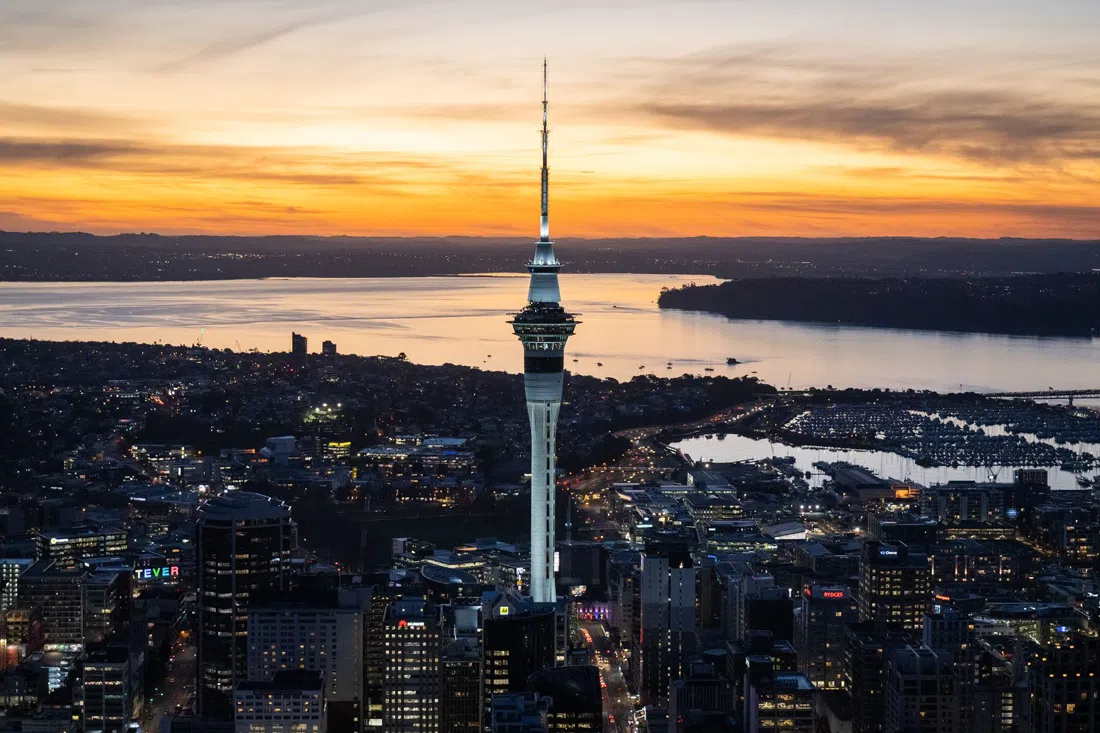
There is no door policy and no requirement to book. Walk-ups are ordinary, groups are fine, and the only real constraint is lift capacity, which staff pace deliberately; at midday in February expect ten or fifteen minutes of queueing. School and tour groups should arrange rates through SkyCity rather than buying thirty individual tickets. The glass floor panels on the Main Observation Level are what children remember, and the hour before sunset is when the harbour stops being a working port and starts being worth photographing. If you only have one visit in you, aim for that hour.
Ninety minutes on a walkway the width of a pencil
SkyWalk (Federal Street, central city) is the climb of the three, and it is the quietest kind of frightening. You are harnessed to an overhead line and walked out onto a narrow platform ringing the tower at 192 metres, a pencil-width strip of steel with no handrail and nothing between you and Victoria Street but your own judgement. The whole thing takes about 90 minutes including briefing and kit, and unlike the jump it asks you to keep making decisions the entire time you are out there, which is why plenty of people find it harder than falling.
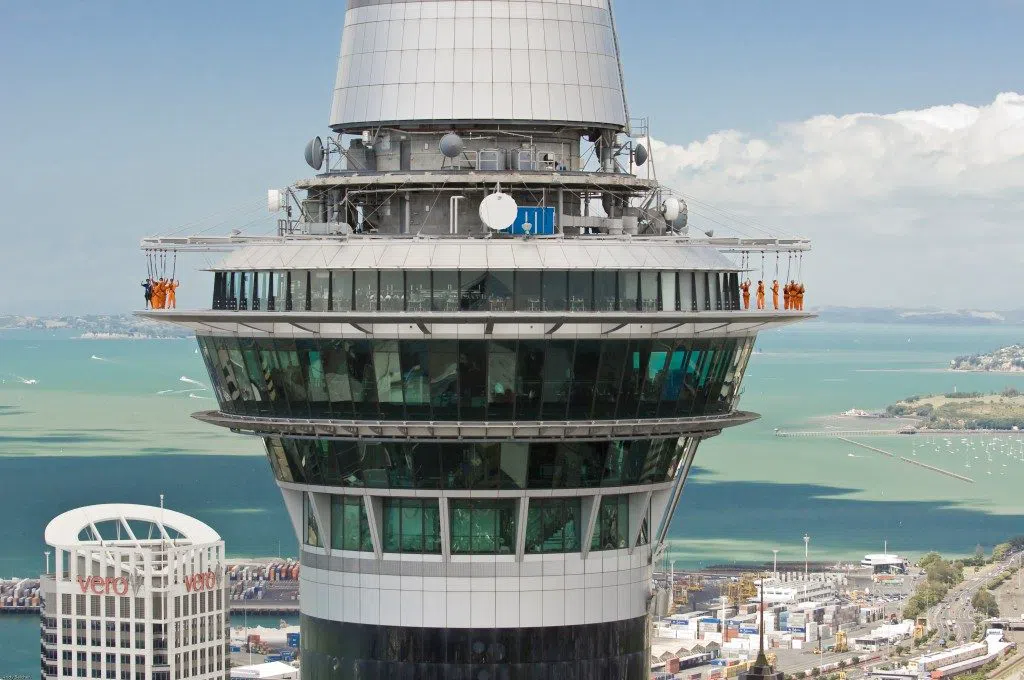
Prices start at NZ$215 for adults and NZ$175 for children, and that includes photographs, video, a t-shirt and a Sky Tower pass, so the observation decks are already paid for if you do this first. Minimum age is 10 and under-15s need an adult's consent. Everyone takes a breath-alcohol test, with no exceptions, so save the celebratory drink for afterwards. It is genuinely built for groups: parties of ten or more get quoted through [email protected], and the pacing means a group of twelve is out on the walkway together rather than split across an afternoon.
SkyWalk, SkyJump and SkyRide are all run by AJ Hackett Bungy New Zealand and share a single check-in desk on Federal Street. Treat them as one operator offering three very different nerve tests, and if your group is split between them, you can all arrive at the same door at the same time.
Eleven seconds of falling in front of a street audience
SkyJump (Federal Street, central city) is the one people photograph from below. It is a base-wire descent rather than a bungy: you step off at 192 metres, reach about 85kph and land on your feet in the plaza after roughly eleven seconds, guided the whole way so you never invert or bounce. Jumps run every fifteen minutes. From NZ$280 for adults and NZ$240 for children, with a minimum age of 10 and a weight range of 35 to 150kg.
Watching is free, which is what makes it work as a group activity. Anyone who has no intention of jumping can stand in the plaza at the base and see the landing from a few metres away, so the two friends who said no are not left drinking coffee for an hour. It also means the jumper has an audience of strangers, and for some people that is the part that takes the nerve.
Wind is the variable to plan around. Operations stand down when gusts top 70kph, and Auckland gets those days in every season, not just winter. If the jump is the centrepiece of your trip, hold a spare afternoon in reserve rather than booking it for the morning of your flight out.
The one that lets people who will not jump still go over the edge
SkyRide (Federal Street, central city) opened in June 2026 and is billed as the world's highest lift-and-descent ride: 192 metres up the outside of the tower, then back down at up to 100kph in about 90 seconds. You sit, you are strapped in, and nobody has to step off anything. From NZ$330 for adults and NZ$290 for children, with solo or tandem seats, riders between 35 and 150kg and tandem capped at 235kg combined.
It is the most expensive of the three and, in my reading of it, the most useful. Every group planning a tower day has at least one person who wants the height and the speed but will not voluntarily leave a platform, and until this year the only options were the walkway or nothing. Tandem seating also solves the nervous-teenager problem. If you are booking for a mixed group of ten, SkyRide is the option that gets the most of them over the edge.
Dinner 190 metres up, and the number most guides get wrong
Orbit 360° Dining (Sky Tower, central city) is New Zealand's only revolving restaurant and the calm third act of the day. One correction, since it is repeated everywhere: Orbit sits on Level 52 at 190 metres, not 192. The 192-metre deck is the SkyWalk and SkyJump level one floor above, so if you are trying to wave at a friend mid-jump from your table, you are looking up, not across.
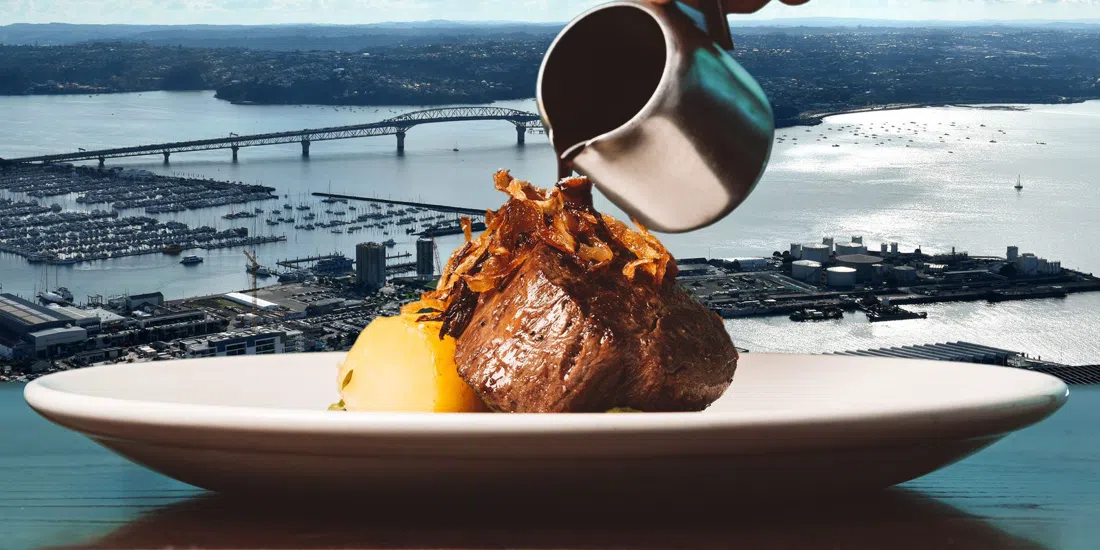
The set menu starts around NZ$99 per person for two courses and realistically lands at NZ$130 to NZ$160 with wine. Dinner sittings are capped at two hours and lunch at ninety minutes, which is fair given the room does a full rotation roughly every hour; you will see the whole city from your chair either way. Window seats need booking well ahead, particularly December through February. Groups and private functions are taken. Diners get complimentary Sky Tower admission either side of the meal, so if you have not used a decks ticket yet, eating here effectively includes one.
Upstairs, SkyBar (Sky Tower, central city) is the tower's top-floor drinking room and the civilised landing after a jump. It is 18-plus, smart-casual, and carries a NZ$40 per person minimum spend, which cocktails at NZ$26 to NZ$30 clear in two rounds. Bookings are required after 5pm with only limited walk-in seats. SkyBar replaced Peter Gordon's Sugar Club, which has closed, so any guide still sending you to the Sugar Club is out of date by years.
Serious food at the tower's feet
If you want the view meal and the best meal of your trip to be two different meals, Federal Street at the tower's base is where the second one is.
Metita (Federal Street, central city) is Michael Meredith's modern Pacific restaurant, built as a tribute to his late mother, and it is in the 2026 MICHELIN Guide New Zealand with two hats at the Cuisine Good Food Awards. Expect NZ$120 to NZ$160 per person à la carte with a drink. It takes groups and offers set group menus for larger tables, but it is one of the hardest reservations in Auckland. Book before you book your flights, not after you land.
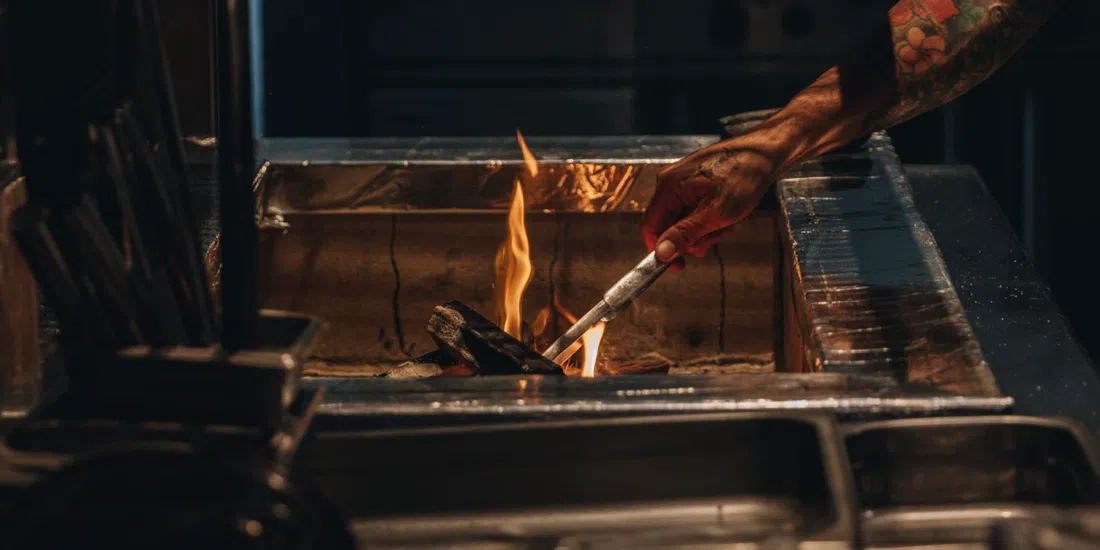
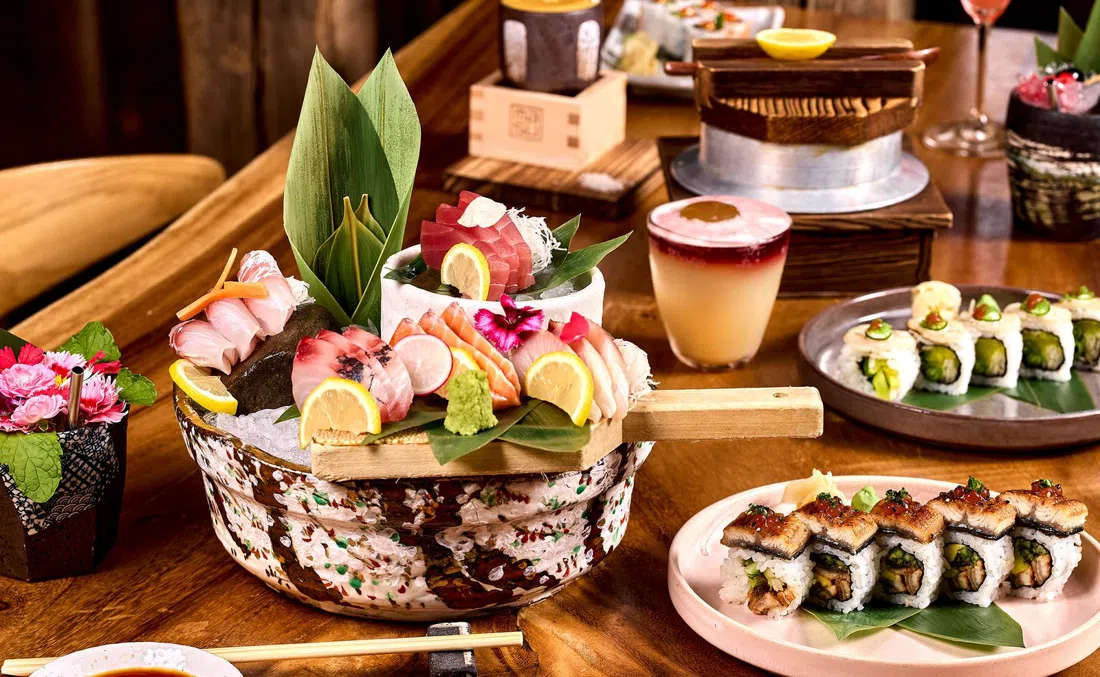
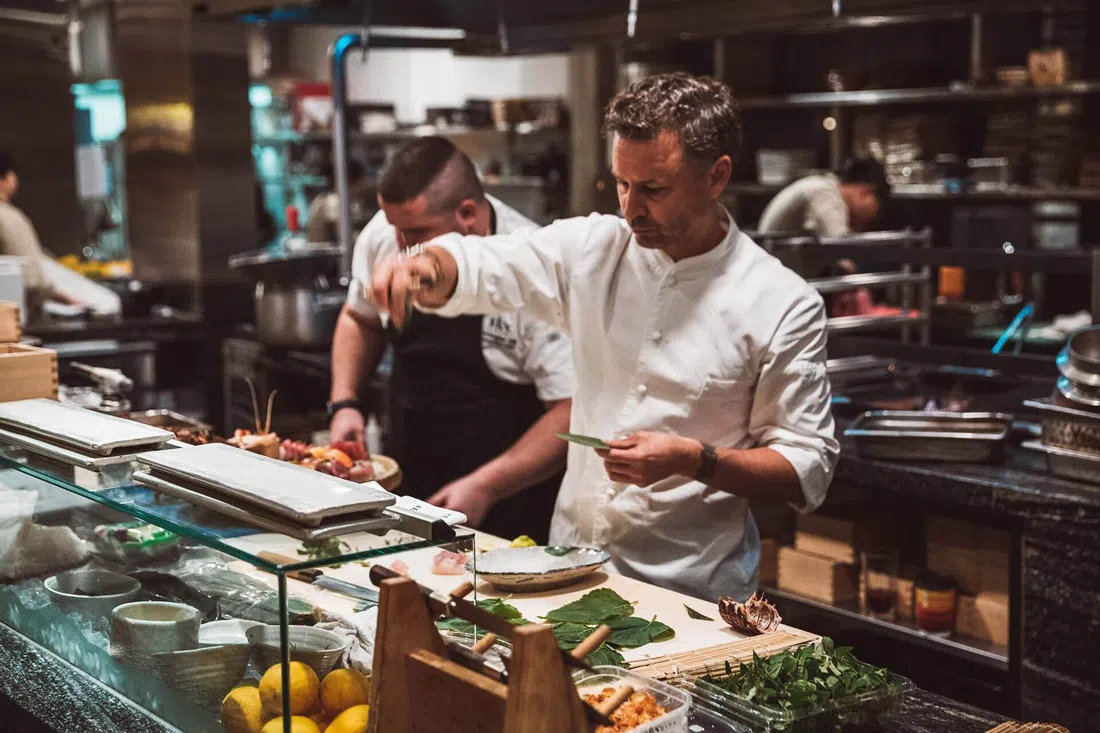
MASU by Nic Watt (Federal Street, central city) is the easiest good table on the street, open seven days for dinner with lunch Wednesday to Friday from noon to 2pm and at weekends. The robata charcoal grill is the point, the sharing menus suit groups, there is a private dining space, and the tuna tataki won Iconic Auckland Eats in 2026. Around NZ$90 to NZ$130 per person. It works as both the pre-jump meal and the post-jump one, though eat lightly beforehand.
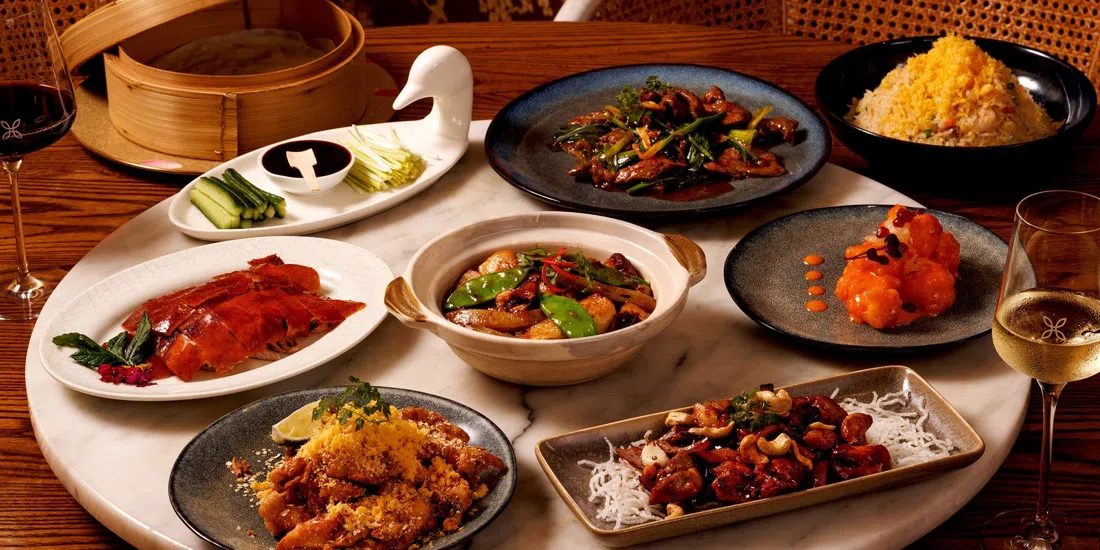
Huami (Federal Street, central city) has New Zealand's first commercial wood-fired duck oven, 45 minutes a bird, and round banquet tables with private rooms and yum cha service. NZ$70 to NZ$110 per person, cheaper at yum cha. Of everything near the tower it is the room most able to seat eight hungry people who have just come off a wire, and the one most likely to say yes at short notice.
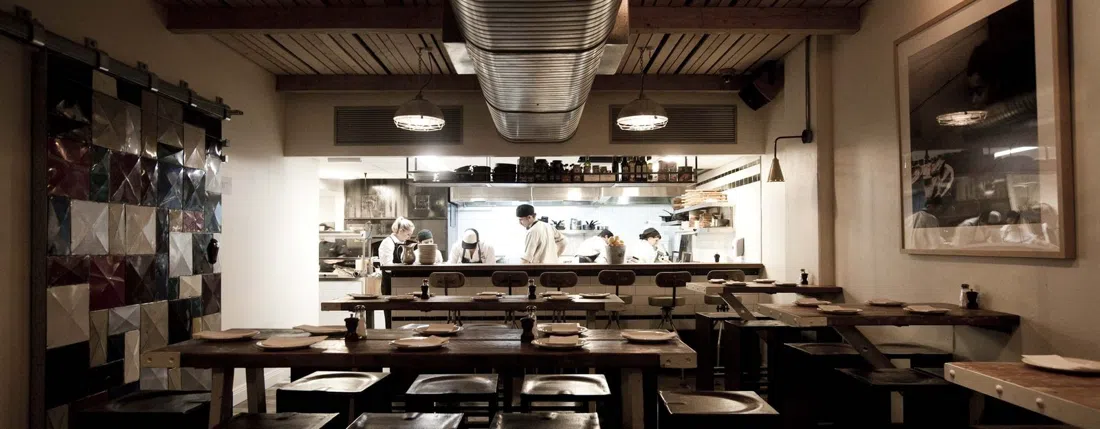
Depot by Al Brown (Federal Street, central city) is the no-bookings institution 200 metres from the tower base, still winning Iconic Auckland Eats for its fish sliders, with an oyster bar that justifies the wait. NZ$50 to NZ$80 per person. Walk-ins only, a waitlist once the room fills, closed Sunday and Monday, and best for two to four. A group of ten will not get in, and standing outside hoping is not a plan.
Photographing the tower instead of from it
There is a case for spending one evening looking at the tower rather than out of it, and Auckland's rooftops make that easy.
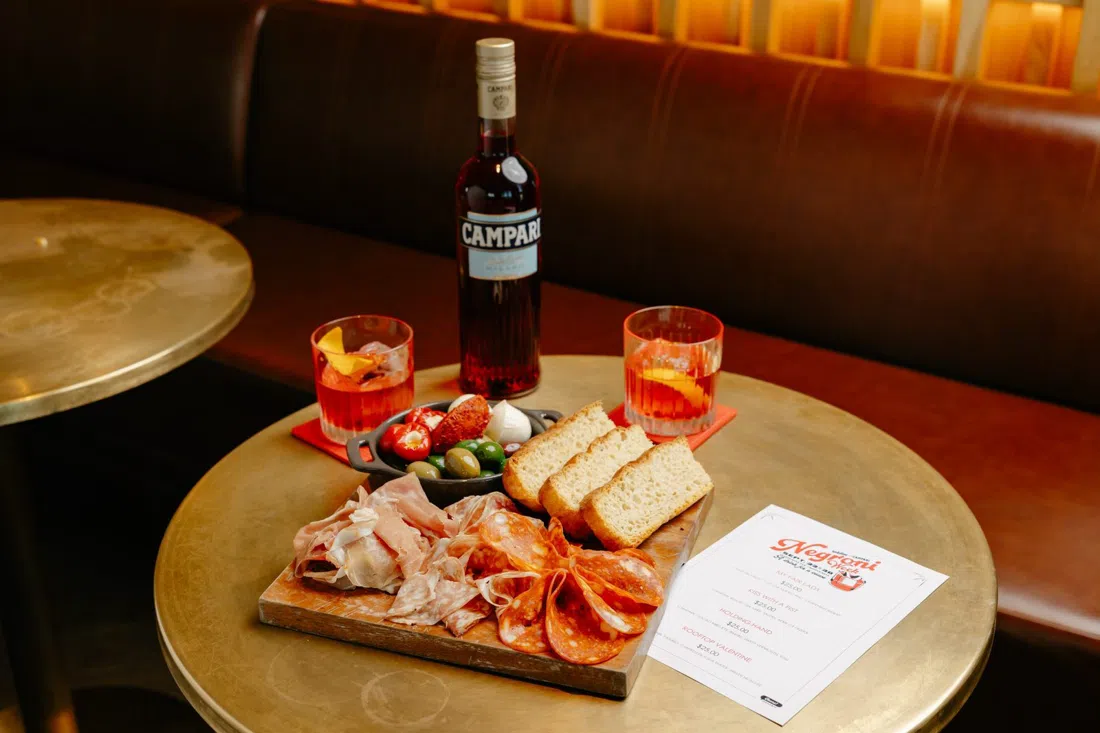
Bar Albert (Albert Street, central city) is New Zealand's highest rooftop bar and the best place in the city to photograph the tower, which is a different proposition from photographing from it. Cocktails run NZ$24 to NZ$28 and around NZ$60 to NZ$90 per person with snacks; the gins are named after Auckland streets and the wine list is sourced within 50 kilometres. There is a private event space, and anything over six people at sunset should be booked.
The Churchill (central city) gives 270-degree views and one of the deepest gin lists in the Southern Hemisphere, with cocktails at NZ$22 to NZ$26 and NZ$55 to NZ$80 per person. The terrace handles groups well. The trap for anyone on a short break is the opening pattern (Tuesday to Saturday, 4pm to 11pm, closed Sunday and Monday), so a weekend arrival can easily miss it entirely.
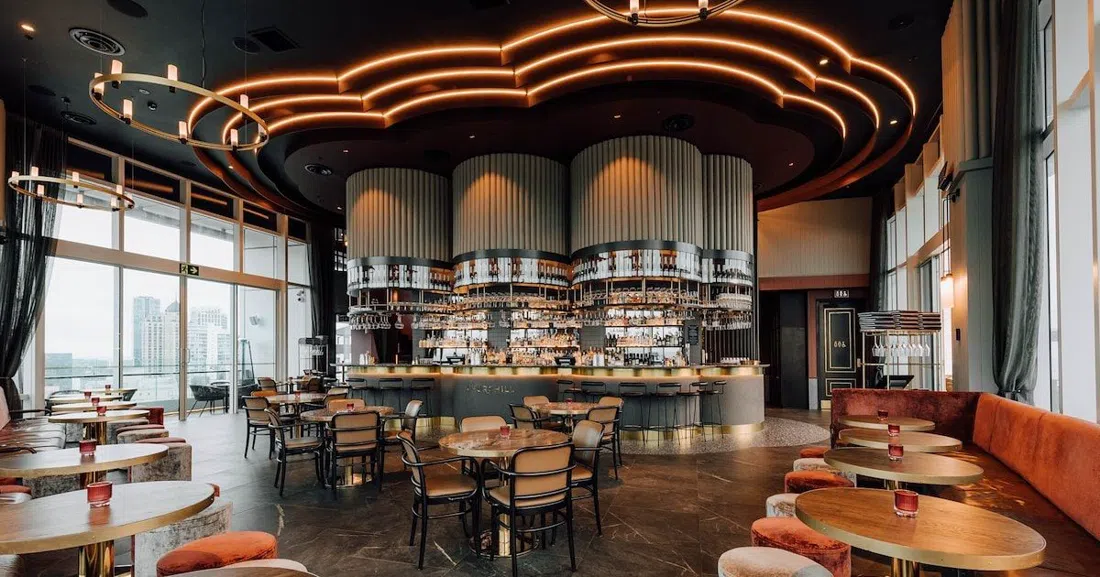
The Glass Goose (8 Federal Street, central city) is the informal counterweight to a NZ$150 dinner in the revolving room, and its garden has the best looking-straight-up-the-tower angle in the city. Long shared tables, function bookings, a casual door and brunch through to late drinks, at NZ$40 to NZ$70 per person.
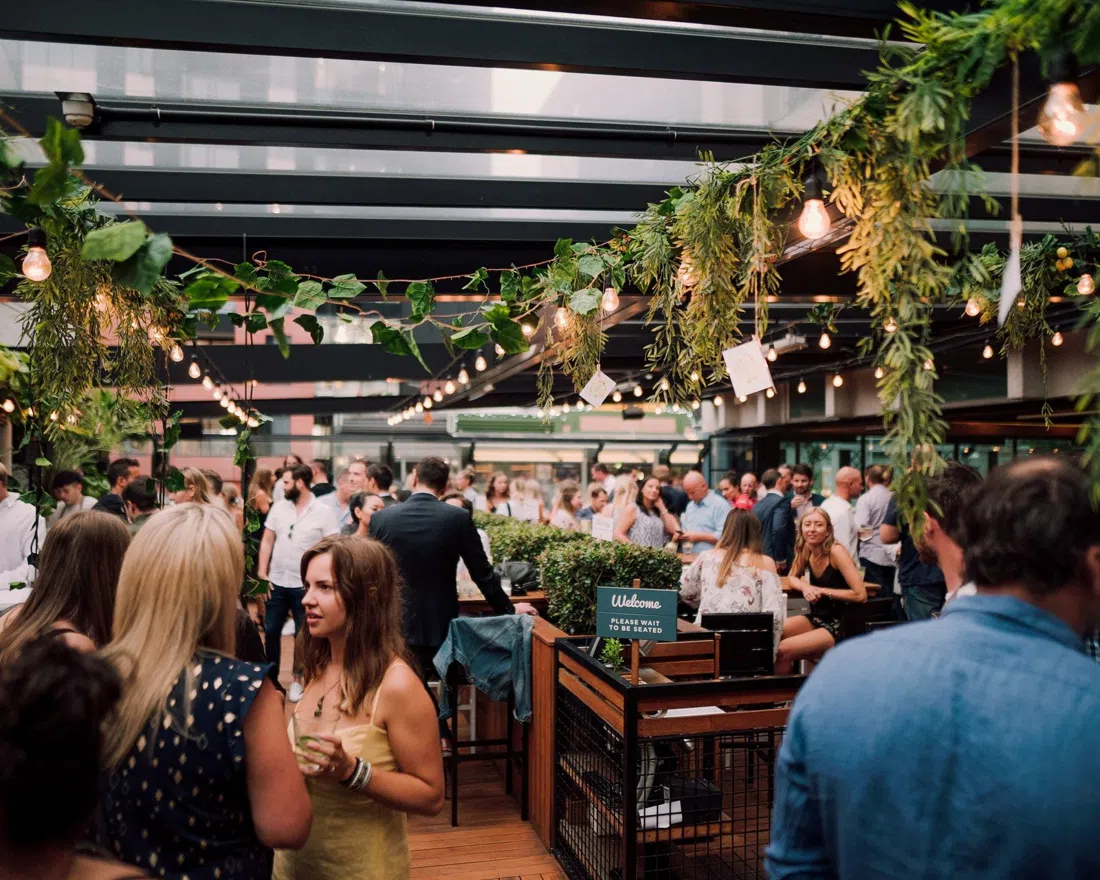
La Zeppa (Drake Street, Freemans Bay) is fifteen minutes' walk from the tower base and one of Auckland's largest group venues, with a big sundeck, full function hire and Mediterranean sharing menus. Renovated in 2024, NZ$50 to NZ$90 per person, walk-ins fine off-peak. For a party of twenty that wants the tower in the photograph and no minimum spend or dress code to manage, this is the right end point.
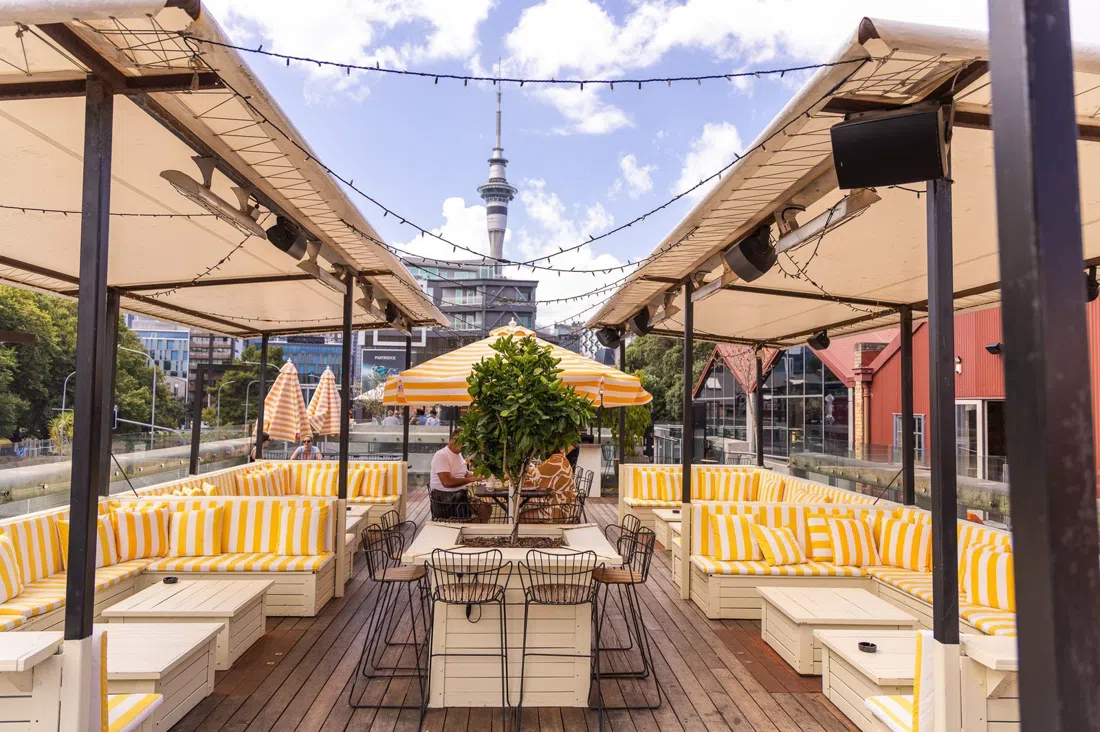
What to do when the wind shuts the edge down
When gusts stand the jump and the walkway down, the substitute is directly across the road. Wētā Workshop Unleashed (88 Federal Street, central city) is a guided 90-minute walk through film-effects craft, around NZ$60 to NZ$75 for adults, with group rates for fifteen or more through [email protected]. Book ahead between November and April. It keeps the same afternoon and the same appetite for spectacle, indoors, and it is a short enough walk that you can check back at the Federal Street desk afterwards in case the wind has dropped.

Getting there, paying and timing it
Everything above except La Zeppa sits within a five-minute walk of the tower, which itself is a ten-minute walk uphill from Britomart, the central rail and ferry hub. Trains and buses use the AT HOP card or contactless payment; from the airport, the Airport Link bus connects to the rail network and takes roughly an hour to the central city, which is usually better value than a taxi for one or two people. Do not hire a car for a tower day, because parking under the precinct is expensive and you will not use it.
Cards are accepted everywhere here and cash is genuinely optional; tipping is not expected. On budget, a modest day is the decks ticket at about NZ$47 plus a rooftop drink and a plate at The Glass Goose, roughly NZ$110 a head. The full rite of passage (SkyWalk or SkyJump, then Orbit with wine, then a cocktail at SkyBar) lands between NZ$400 and NZ$500 per person, and SkyRide instead of the jump pushes it higher.
On timing, November to April is the busy half of the year and the half most likely to give you the 82-kilometre view; book Orbit window tables and Metita weeks out in that window. Put the height activity early in your stay so a windy afternoon does not cost you the whole thing, and keep The Churchill and Depot's closed days in mind when you sketch the week. For where to sleep within walking distance of the Federal Street desk, start with the Auckland hotel search, and for the rest of the city beyond the tower's shadow, the Auckland guide covers the harbour, the west coast beaches and the volcanic cones that the Sky Deck shows you from above.